Reducing Passengers' Uncertainty
Redesign of information channels across stages prior to airport arrival, enabling passengers to understand phytosanitary regulations and declaration requirements before reaching the inspection zone
The Agricultural and Livestock Service (SAG) is a Chilean public agency responsible for protecting the country’s forestry and agricultural heritage and controlling the entry and exit of products and species that may pose a risk to this heritage.
This consulting engagement was conducted as the capstone project for the Service Design Diploma at the School of Design of the Pontificia Universidad Católica de Chile in 2016.
The initiative addressed SAG’s need to improve process efficiency and user experience across both internal operations and user-facing touchpoints. Specifically, the project focused on redesigning the passenger experience at Santiago International Airport’s border control.
Given the complexity of SAG’s regulatory protocols and the need for clear, accessible public communication, the project evolved into an in-depth exploration of the passenger experience within airport border control.
Some of the key design challenges addressed included:
In my role as Service Designer within the consulting team, I co-designed and executed strategic, user-centered activities to build a deep understanding of both SAG’s operational complexities and the specific needs of passengers.
The consulting engagement was structured around key activities and deliverables:
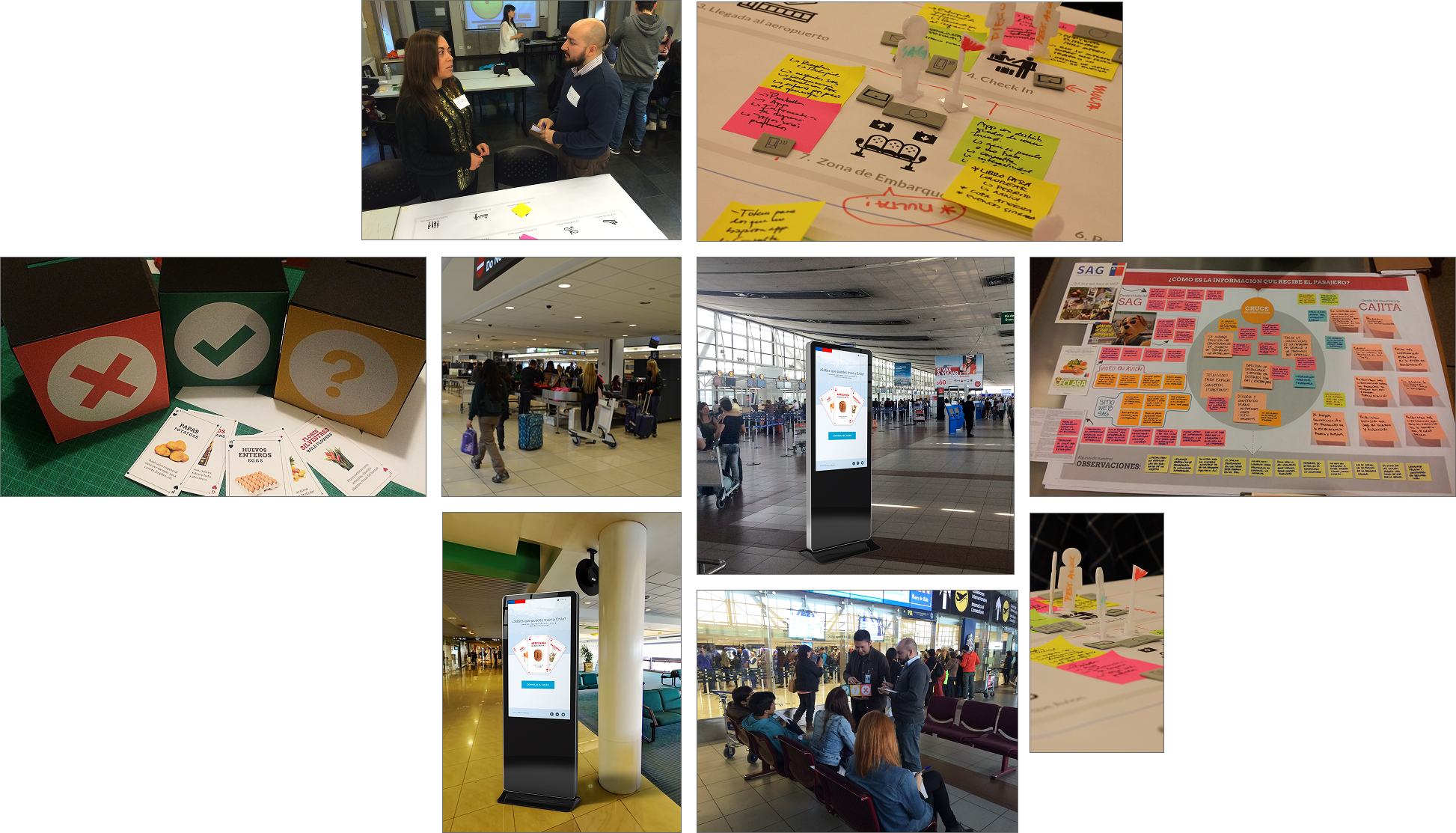
In the initial phase, exploratory research identified key needs and challenges for both SAG and passengers within the airport border control environment. Contextual interviews were conducted with SAG officers, passengers, and other key stakeholders to gain a comprehensive understanding of the ecosystem.
Custom research tools, such as surveys and interview guides, were designed to gather qualitative data from officers and passengers. These tools were tailored to the environment and project goals to ensure high-quality, actionable insights.
Co-design workshops facilitated active collaboration among service designers, SAG staff, and passengers. These sessions generated ideas, identified service improvement opportunities, and provided direct feedback from core stakeholders in the border control experience.
A detailed journey map was developed, tracing the passenger experience from arrival at Santiago International Airport to their interaction with SAG at inspection checkpoints. This exercise provided an end-to-end view of touchpoints and key improvement areas.
The ideation phase focused on generating solutions for the identified challenges through creative concept design. Selected solutions were prototyped, allowing for early evaluation and iterative refinement.
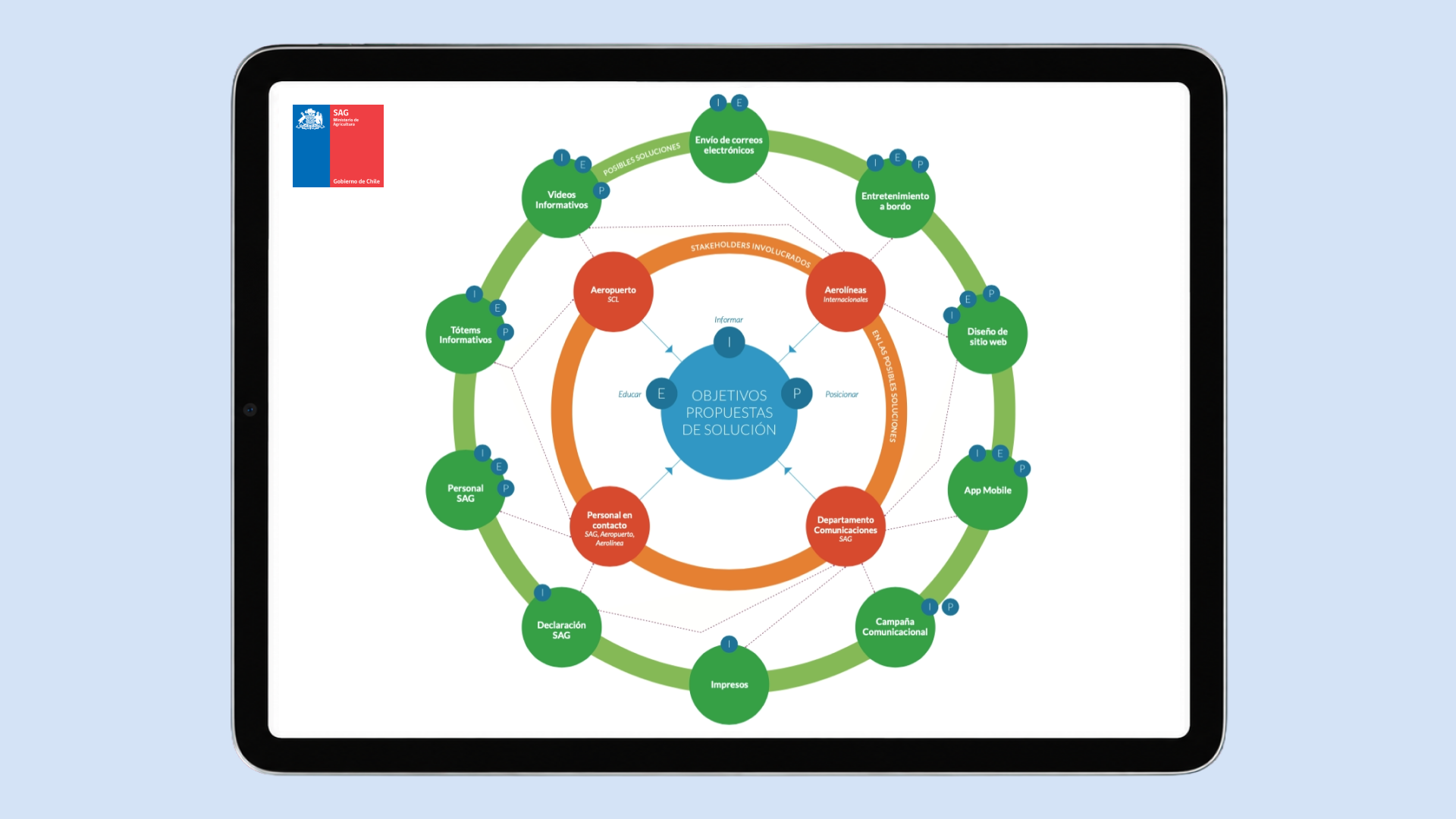
The project delivered strategic recommendations and design solutions to streamline SAG’s operations while improving the passenger experience at Santiago International Airport border control.
Recommendations covered improved communication strategies, streamlined processes, and enhanced officer-passenger interactions. A user-centered approach and active stakeholder collaboration were key to successfully completing this Service Design proposal for SAG.
Redesign of information channels across stages prior to airport arrival, enabling passengers to understand phytosanitary regulations and declaration requirements before reaching the inspection zone
Aligned interaction and communication guidelines for SAG staff, designed to transform strict, opaque enforcement into a transparent, clear, and low-stress process for passengers.
Structuring the passengers’ Journey Map, enabling the institution to identify communication blind spots and critical friction points across all journey stages.
Indirect optimization of checkpoint dynamics by ensuring passengers arrive prepared regarding their luggage declaration, reducing bottlenecks caused by misinformation.
I've spent 15+ years helping companies, startups, and professionals make smarter decisions in UX Design and Product Strategy.
Whether you're looking to grow your career or your company needs consulting or coaching for its team, just send me an email using this form.
You can also reach me through any of my social platforms.