
Friction Reduction as an Adoption Leverage
Integrating and standardizing channels reduces user friction. This drives app adoption, after-sales transactions, and traffic to private sites, without the need to increase advertising investment.
Ilógica is a Latin American user experience (UX) design and digital development consultancy, with main offices in Chile and Colombia. The firm specializes in user research, product design, and agile software development.
Between March and May 2025, I worked as an independent UX Consultant at Ilógica to support the diagnosis and experience strategy for the digital ecosystem of a leading insurance company in Chile: mobile app, private portal, public website, quote engines, virtual broker office, and other self-service channels.
The ecosystem had grown without a unified Experience strategy. Each digital asset was designed and operated independently, resulting in customer friction: inconsistent navigation across platforms, duplicate or incomplete content, and processes forcing users to switch channels to complete a single transaction.
The key strategic and operational challenges of this engagement were:
As a UX Consultant, I provided technical expertise and secondary research across project initiatives, working alongside the Ilógica team in the following areas:
We conducted a heuristic evaluation of the company’s digital assets (mobile app, public and private websites, quote engines, and virtual office). The diagnosis revealed several cross-cutting usability issues, offering a clear view of the lack of asset integration and pinpointing friction points driving customer drop-offs.
Based on the diagnosis, we defined an experience vision (converting customers into brand advocates through an agile, seamless, empathetic, transparent, and educational experience) translated into five UX pillars and six strategic guidelines: asset integration, standardization, information architecture, accessibility, personalization, and content—each tied to channel-specific KPIs.
We prioritized initiatives based on cross-functional impact and channel criticality: starting with foundational initiatives (UX research, user archetypes, design system), followed by quote engines and the virtual broker office, and lastly the private portal, mobile app, and public website. In total, over 50 activities were structured into an incremental roadmap.
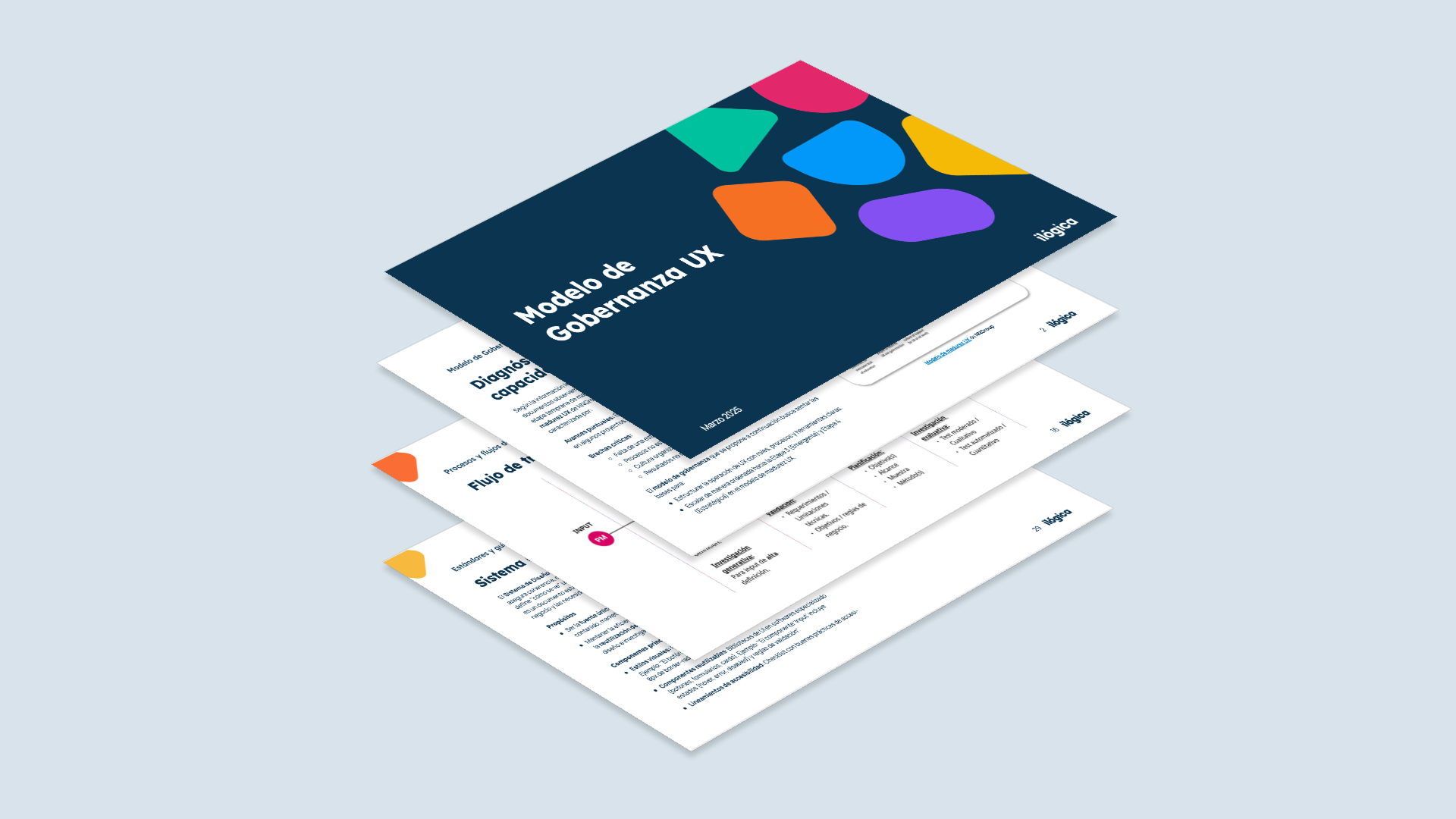
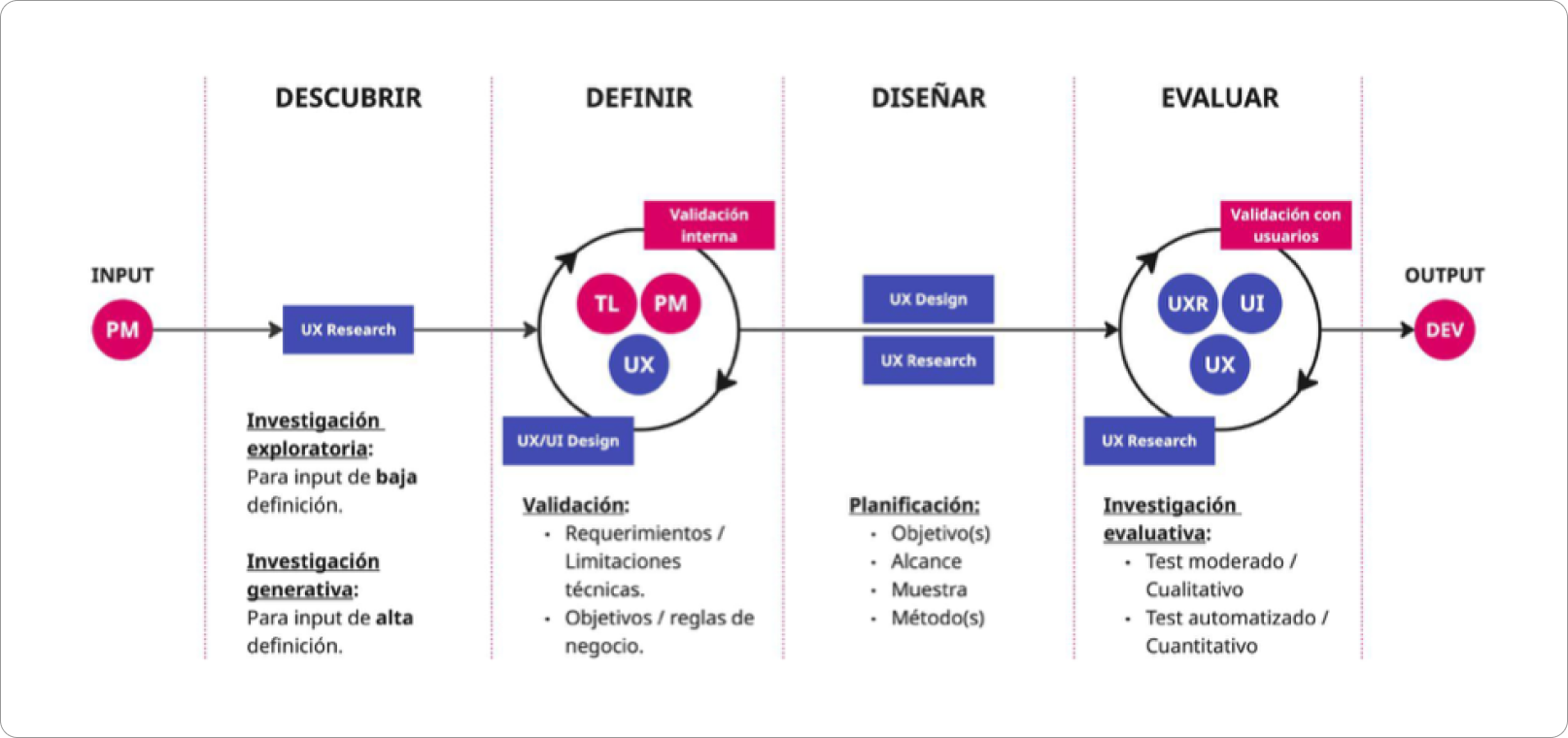
Finally, we defined the organizational structure, roles, and processes to sustain UX practices post-consulting: a strategic UX Committee, an operational tier with dedicated workstreams and design roles, an adapted Double Diamond workflow (Design Thinking framework), a design system, and recurring UX audits.
As a result of my collaboration in this consultancy, specific lines of action were defined to move the KPIs of the company’s digital ecosystem, connecting the measurable objectives of the business with the different strategic UX guidelines.
Integrating and standardizing channels reduces user friction. This drives app adoption, after-sales transactions, and traffic to private sites, without the need to increase advertising investment.
Both the strategic pillars and UX guidelines were aligned with specific business KPIs: increased conversion on key landing pages (Auto +12%, Home +15%, Health +20%) and exceeding 80% satisfaction on private channels.
This roadmap prioritized improvements to quote generators and the virtual office over the public website because these digital assets leveraged a higher percentage of business sales, generating a greater commercial impact in the short term.
We defined roles and decision criteria to provide clear ownership of the User Experience. This governance model seeks to protect the consistency of the design strategy over time in the face of changes in company priorities.
I've spent 15+ years helping companies, startups, and professionals make smarter decisions in UX Design and Product Strategy.
Whether you're looking to grow your career or your company needs consulting or coaching for its team, just send me an email using this form.
You can also reach me through any of my social platforms.